Cooking techniques for beginners can feel overwhelming at first. There are pans to choose, temperatures to manage, and ingredients that seem to have minds of their own. But here’s the good news: most home cooking relies on a handful of core skills. Master those, and suddenly dinner stops being a chore.
This guide breaks down the essential cooking techniques for beginners, from understanding heat to handling a knife with confidence. Whether someone is making their first stir-fry or attempting a Sunday roast, these foundational skills will serve them well. No culinary school required.
Table of Contents
ToggleKey Takeaways
- Mastering cooking techniques for beginners starts with understanding heat—conduction, convection, and radiation—and knowing when to use high versus low temperatures.
- Proper knife skills, including the claw grip and essential cuts like dice, mince, and julienne, speed up prep work and ensure even cooking.
- Sautéing and simmering are fundamental stovetop cooking techniques for beginners that form the foundation of countless everyday recipes.
- Always preheat your pan and oven before cooking to prevent sticking, promote browning, and achieve consistent results.
- Practice mise en place—preparing and organizing all ingredients before cooking—to reduce stress and improve timing in the kitchen.
- Start with simple recipes and taste as you go; confidence in the kitchen builds through repetition and learning from mistakes.
Understanding Heat: The Foundation of Cooking
Heat transforms raw ingredients into cooked food. That sounds obvious, but understanding how heat works is one of the most important cooking techniques for beginners to grasp.
There are three main ways heat transfers to food:
- Conduction happens when food touches a hot surface directly. Think of a steak searing in a cast iron pan.
- Convection occurs when hot air or liquid circulates around food. Ovens and boiling water use convection.
- Radiation transfers heat through waves, like a broiler or grill.
Temperature control matters just as much as the cooking method. High heat creates browning and crispy textures. Low heat allows flavors to develop slowly without burning. A common mistake among beginners is cranking the heat too high and ending up with food that’s charred outside but raw inside.
One practical tip: let pans preheat before adding food. A properly heated pan prevents sticking and promotes even cooking. Testing readiness is simple, add a drop of water to the pan. If it sizzles and evaporates quickly, the pan is ready.
Knife Skills Every Home Cook Should Know
Good knife skills speed up prep work and keep fingers safe. They’re fundamental cooking techniques for beginners who want to cook efficiently.
Start with a sharp chef’s knife. Dull knives require more pressure and slip more easily, that’s when accidents happen. A basic 8-inch chef’s knife handles most kitchen tasks.
The Claw Grip
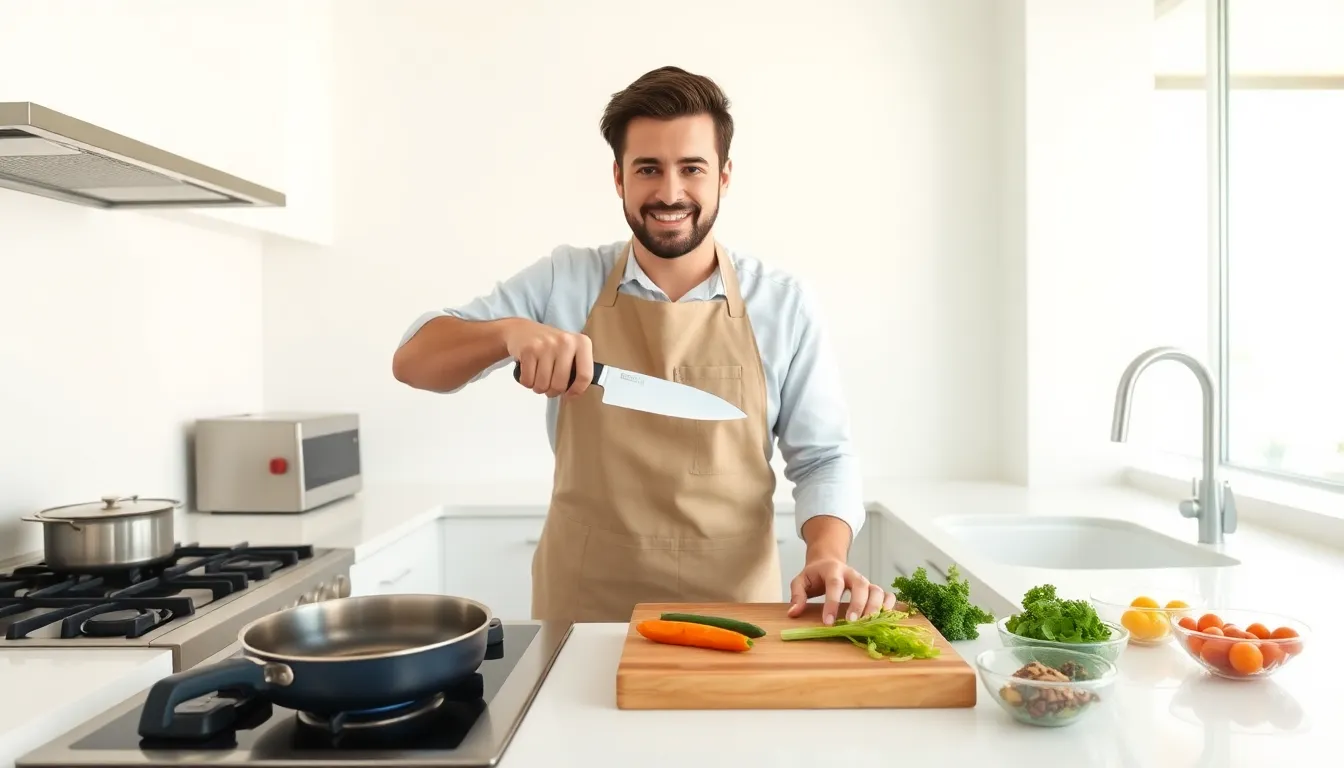
Curl fingertips inward and use knuckles to guide the blade. This position keeps fingers away from the cutting edge while maintaining control over ingredients.
Essential Cuts
- Dice: Cut food into uniform cubes. Start by slicing, then cut crosswise.
- Mince: Chop ingredients very finely. Garlic and herbs often get minced.
- Julienne: Create thin matchstick-shaped strips. Carrots and bell peppers work well.
- Chiffonade: Stack leafy greens, roll them tight, and slice into thin ribbons.
Consistency in cuts matters because uniform pieces cook at the same rate. Unevenly chopped vegetables mean some pieces burn while others stay undercooked.
Practice makes these cooking techniques for beginners feel natural. Start with forgiving vegetables like onions and carrots before moving to delicate herbs.
Must-Know Stovetop Techniques
The stovetop is where most cooking happens. These cooking techniques for beginners form the backbone of countless recipes.
Sautéing and Pan-Frying
Sautéing uses high heat and a small amount of fat to cook food quickly. The French word “sauter” means “to jump”, and that’s exactly what ingredients should do in the pan. Keep food moving by tossing or stirring frequently.
Pan-frying uses more fat than sautéing and typically involves larger pieces of food. Chicken cutlets, fish fillets, and pork chops are pan-frying favorites. The key is maintaining consistent medium-high heat and resisting the urge to flip too often. Let food develop a golden crust before turning.
Both techniques work best when:
- The pan is properly preheated
- Food is patted dry before cooking (moisture prevents browning)
- The pan isn’t overcrowded (too much food lowers temperature)
Simmering and Boiling
Boiling means water reaches 212°F (100°C) with large, rolling bubbles. Pasta, potatoes, and blanched vegetables cook in boiling water.
Simmering keeps liquid just below boiling, around 185-205°F. Small bubbles break the surface gently. Soups, stews, sauces, and braises benefit from simmering because the lower temperature prevents proteins from toughening.
A common error is confusing the two. Boiling a delicate sauce causes it to break. Simmering pasta makes it gummy. Knowing when to use each technique separates good cooks from frustrated ones.
Basic Oven Techniques
Ovens provide consistent, hands-off cooking. Understanding basic oven techniques gives beginners more meal options.
Roasting uses dry heat to cook proteins and vegetables. High temperatures (400-450°F) create caramelization on the outside while keeping interiors moist. Spread ingredients in a single layer on a sheet pan, crowding leads to steaming instead of roasting.
Baking typically refers to breads, pastries, and casseroles cooked with dry heat. Temperature precision matters more here. An oven thermometer helps verify accuracy since many ovens run hot or cold.
Broiling applies intense direct heat from above. It’s excellent for finishing dishes, melting cheese, or quickly charring vegetables. Food goes on the top rack, close to the heating element. Watch carefully, broiling can go from perfect to burnt in seconds.
These cooking techniques for beginners share one requirement: proper preheating. Putting food in a cold oven disrupts cooking times and affects texture. Most ovens need 15-20 minutes to reach target temperature.
Using an instant-read meat thermometer removes guesswork from protein cooking. Safe internal temperatures vary by meat type, so checking beats cutting into food and losing juices.
Tips for Building Confidence in the Kitchen
Learning cooking techniques for beginners is one thing. Feeling confident using them is another.
Start simple. Choose recipes with five to seven ingredients and techniques already covered here. Success builds momentum. Attempting a complicated French dish on week two usually ends in takeout.
Read recipes completely before starting. Surprises halfway through cooking cause stress and mistakes. Knowing each step in advance allows proper prep and timing.
Mise en place changes everything. This French term means “everything in its place.” Measure ingredients, chop vegetables, and gather equipment before turning on the stove. Professional kitchens run on mise en place for good reason.
Taste as you go. Seasoning at the end rarely saves a bland dish. Tasting throughout allows adjustments when they actually help.
Accept imperfection. Even experienced cooks burn things, over-salt dishes, and make timing errors. One bad meal teaches more than ten perfect ones. The kitchen rewards those who keep showing up.
These cooking techniques for beginners become second nature with repetition. A year from now, sautéing vegetables or roasting a chicken will feel automatic.